Introduction
In the rapidly evolving field of artificial intelligence, Multi-Agent Systems (MAS) have emerged as a powerful paradigm for addressing complex problems through decentralized and collaborative approaches. These systems leverage multiple interacting agents, each with its own autonomy and capabilities, to achieve goals that are difficult to manage with a single entity. This article provides an in-depth exploration of the key features of multi-agent systems, highlighting their unique attributes and the value they bring to various applications.
What is a Multi-Agent System?
A Multi-Agent System (MAS) is a collection of autonomous agents that interact and collaborate to achieve specific objectives. These agents can be software-based or physical entities, such as robots. MAS are designed to tackle complex problems that require coordination, communication, and cooperation among multiple entities.
Definition and Components
- Agents: The fundamental entities in a MAS, capable of perceiving their environment, making decisions, and taking actions.
- Environment: The context or setting in which agents operate, influencing their behavior and interactions.
- Interaction: The processes through which agents communicate and coordinate their actions to achieve common goals.
Core Features of Multi-Agent Systems
1. Autonomy and Decision-Making
Autonomous Operation
Each agent in a MAS operates independently, making its own decisions based on its internal state and observations of the environment. This autonomy allows agents to perform tasks without constant oversight, enhancing flexibility and efficiency.
Local Decision-Making
Agents make decisions based on local information and interactions with other agents. This decentralized approach allows MAS to be more adaptive and responsive to dynamic conditions, as agents can quickly adjust their behavior based on new information.
2. Communication and Coordination
Inter-Agent Communication
Effective communication is crucial for MAS. Agents use various communication protocols and languages to exchange information, coordinate actions, and collaborate on tasks. This communication ensures that agents work together towards common objectives and helps in resolving conflicts.
Coordination Mechanisms
Coordination mechanisms manage how agents interact and share resources. Techniques such as negotiation, task allocation, and synchronization are employed to ensure that agents collaborate efficiently and avoid redundant or conflicting actions.
3. Adaptability and Learning
Adaptive Behavior
MAS are designed to be adaptive, meaning they can adjust to changes in the environment or objectives. This adaptability is achieved through various strategies, including learning from interactions, updating internal models, and modifying behaviors based on new data.
Learning Capabilities
Some MAS incorporate machine learning algorithms that enable agents to learn from their experiences and improve their performance over time. This learning capability allows agents to refine their strategies and responses based on historical data and evolving conditions.
4. Scalability and Flexibility
Dynamic Scalability
One of the major advantages of MAS is their scalability. The system can easily accommodate new agents or remove existing ones without significant disruptions. This flexibility allows MAS to handle varying workloads and adapt to changing requirements efficiently.
Flexible Architecture
The architecture of MAS is designed to be flexible, supporting the integration of different types of agents and communication protocols. This flexibility enables the system to be customized for specific applications and environments.
5. Distributed Problem Solving
Collaborative Problem Solving
MAS excel in solving complex problems through distributed problem-solving approaches. Agents work together to tackle tasks that may be too challenging for a single agent or central system. This collaborative effort enhances the system’s overall problem-solving capabilities.
Decentralized Control
In a MAS, control is decentralized, meaning there is no single point of authority. This decentralized approach allows for more robust and fault-tolerant systems, as the failure of one agent does not compromise the entire system.
6. Robustness and Fault Tolerance
Fault Tolerance
The distributed nature of MAS provides inherent fault tolerance. If one agent fails or encounters an issue, other agents can continue to operate, ensuring that the system remains functional. This robustness is crucial for applications requiring high reliability and resilience.
Self-Healing Capabilities
Some MAS are equipped with self-healing capabilities, allowing them to detect and recover from faults or failures. These systems can reconfigure themselves, redistribute tasks, and maintain functionality despite disruptions.
7. Enhanced Security
Security Measures
Security is a critical aspect of MAS, especially when dealing with sensitive information or critical tasks. MAS can implement various security measures, including encryption, authentication, and access control, to protect data and ensure secure interactions between agents.
Intrusion Detection
MAS can incorporate intrusion detection mechanisms to monitor and identify potential security threats. By analyzing patterns and behaviors, agents can detect and respond to malicious activities or unauthorized access attempts.
Applications of Multi-Agent Systems
The features of multi-agent systems enable their application across various domains:
- Manufacturing: Coordination of robotic systems for assembly lines and quality control.
- Finance: Algorithmic trading and fraud detection.
- Healthcare: Patient management systems and medical diagnostics.
- Traffic Management: Optimization of traffic flow and intelligent transportation systems.
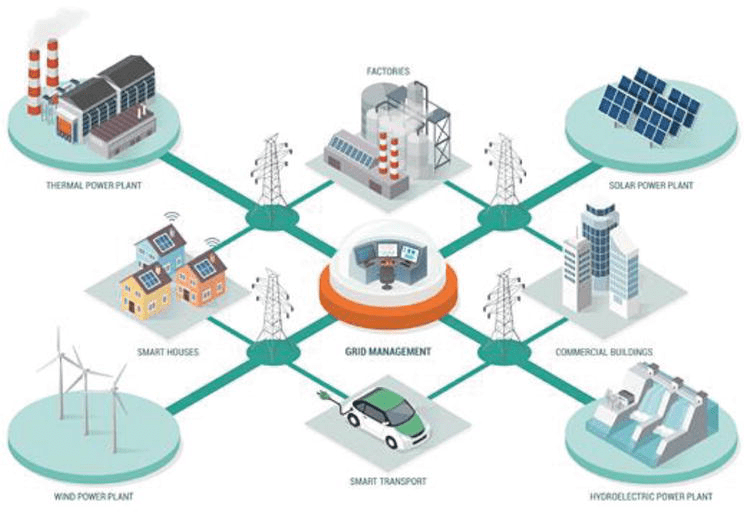
- Smart Grids: Energy management and demand response.
Conclusion
Multi-Agent Systems offer a versatile and powerful framework for solving complex problems through distributed coordination and interaction. Their core features—autonomy, communication, adaptability, scalability, distributed problem-solving, robustness, and security—make them invaluable across a wide range of applications. As technology continues to advance, the capabilities of MAS will likely expand, driving further innovation and efficiency in addressing real-world challenges. Embracing these systems can lead to enhanced performance, improved decision-making, and a competitive edge in today’s fast-paced technological landscape.
 AI4ever
Leave a comment