Customer service has always been a critical component of business success, but in today’s fast-paced, digital-first world, the demands on customer service teams have never been greater. As companies strive to meet the rising expectations of their customers, Artificial Intelligence (AI) has emerged as a game-changing technology.
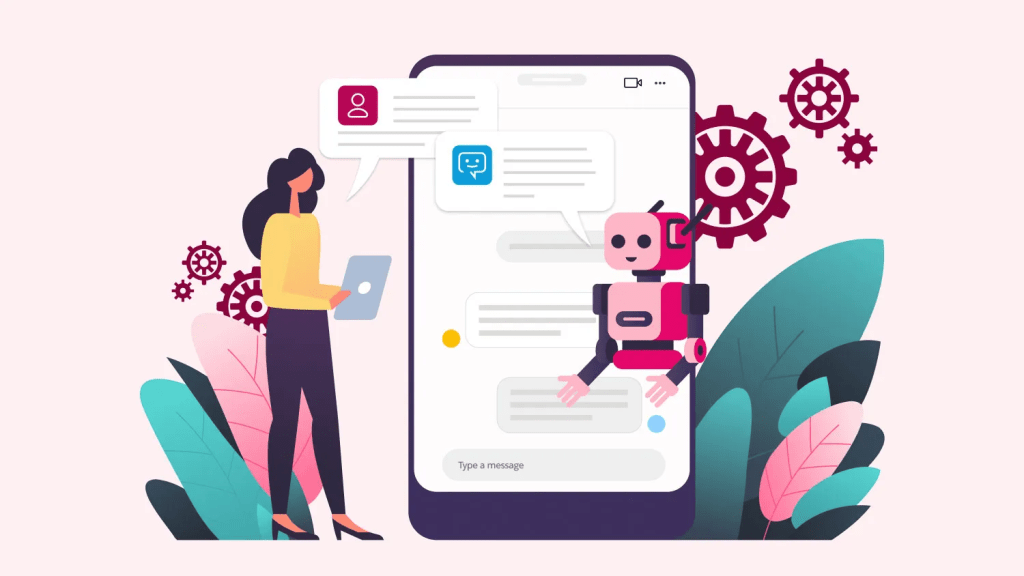
This article delves into the profound impact of AI in customer service, exploring how it is reshaping the landscape, enhancing customer experiences, and driving business growth.
Introduction: The Evolution of Customer Service
From Traditional to AI-Driven Customer Service
Traditionally, customer service relied heavily on human agents to handle inquiries, resolve issues, and provide support. While this approach has been effective, it also comes with limitations, such as long wait times, inconsistent service quality, and high operational costs. The introduction of AI into customer service has revolutionized the industry, offering solutions that are faster, more efficient, and scalable.
Why AI Matters in Customer Service
AI matters in customer service because it enables businesses to deliver personalized, efficient, and responsive support at scale. By automating routine tasks, AI frees up human agents to focus on more complex issues, improving overall service quality. Additionally, AI-driven tools provide valuable insights into customer behavior, allowing companies to anticipate needs and tailor their offerings accordingly.
The Role of AI in Enhancing Customer Service
1. AI-Powered Chatbots and Virtual Assistants
Revolutionizing Customer Interactions
AI-powered chatbots and virtual assistants have become ubiquitous in customer service. These tools are capable of handling a wide range of customer inquiries, from answering frequently asked questions to processing orders and providing technical support. By leveraging natural language processing (NLP) and machine learning, these AI systems can understand and respond to customer queries in real-time, providing instant support and reducing the need for human intervention.
24/7 Availability
One of the most significant advantages of AI-powered chatbots is their ability to provide round-the-clock support. Unlike human agents who require breaks and cannot work 24/7, chatbots can handle customer inquiries at any time of the day or night, ensuring that customers receive prompt assistance whenever they need it.
Personalization at Scale
AI-driven chatbots can analyze customer data to deliver personalized experiences. For example, they can recommend products based on a customer’s previous purchases or tailor responses based on past interactions. This level of personalization not only enhances the customer experience but also drives customer loyalty and increases sales.
2. AI in Customer Analytics
Understanding Customer Behavior
AI plays a crucial role in analyzing customer data to uncover insights into behavior, preferences, and pain points. By processing vast amounts of data, AI algorithms can identify patterns and trends that human analysts might miss. These insights allow businesses to better understand their customers and make data-driven decisions to improve service delivery.
Predictive Analytics for Proactive Support
Predictive analytics powered by AI enables companies to anticipate customer needs and address issues before they escalate. For example, if an AI system detects that a customer is likely to encounter a problem based on their previous interactions, it can proactively offer solutions or alert a human agent to intervene. This proactive approach not only improves customer satisfaction but also reduces the likelihood of customer churn.
3. AI in Workflow Automation
Streamlining Routine Tasks
AI-driven automation is transforming the way customer service teams operate by streamlining routine tasks. Processes such as ticket routing, case classification, and follow-up emails can be automated using AI, reducing the workload on human agents and increasing efficiency. This automation ensures that customer inquiries are handled quickly and accurately, leading to faster resolution times.
Enhancing Agent Productivity
By automating repetitive tasks, AI allows customer service agents to focus on more complex and high-value activities. For example, AI can automatically categorize and prioritize incoming tickets, enabling agents to concentrate on resolving critical issues. This not only enhances productivity but also improves job satisfaction, as agents are no longer bogged down by mundane tasks.
4. AI-Driven Sentiment Analysis
Gauging Customer Sentiment
Sentiment analysis is another area where AI is making a significant impact. By analyzing the tone and language used in customer interactions, AI can gauge the sentiment behind a customer’s message—whether they are satisfied, frustrated, or angry. This insight allows businesses to tailor their responses and address concerns more effectively, ultimately improving the overall customer experience.
Real-Time Feedback
AI-driven sentiment analysis provides real-time feedback to customer service teams, enabling them to adjust their approach on the fly. For instance, if a customer expresses dissatisfaction during a chat, the AI system can prompt the agent to offer a discount or escalate the issue to a supervisor. This real-time responsiveness helps to de-escalate tense situations and turn negative experiences into positive ones.
The Business Impact of AI in Customer Service
1. Cost Reduction and Efficiency Gains
Lower Operational Costs
One of the most significant benefits of AI in customer service is the reduction in operational costs. By automating routine tasks and handling a large volume of inquiries, AI-driven tools can reduce the need for a large customer service workforce. This not only lowers labor costs but also reduces the expenses associated with training, managing, and retaining customer service agents.
Increased Efficiency
AI-powered systems are capable of processing information and resolving issues much faster than human agents. This increased efficiency translates to shorter response times, faster issue resolution, and an overall improvement in customer service metrics. Companies that leverage AI in their customer service operations often see a significant boost in productivity and efficiency.
2. Enhanced Customer Satisfaction and Loyalty
Improved Response Times
AI enables companies to provide instant support to their customers, significantly reducing wait times. Whether it’s through chatbots, automated emails, or predictive support, AI ensures that customers receive prompt assistance, leading to higher satisfaction levels.
Personalized Experiences
Personalization is key to building customer loyalty, and AI excels in this area. By analyzing customer data and behavior, AI systems can deliver tailored experiences that resonate with individual customers. Whether it’s recommending products, offering personalized discounts, or addressing specific concerns, AI helps to create a more engaging and satisfying customer experience.
3. Data-Driven Decision Making
Leveraging Customer Insights
The data generated through AI-driven customer service interactions is a valuable asset for businesses. By analyzing this data, companies can gain deep insights into customer preferences, behavior, and pain points. These insights can then be used to inform business strategies, product development, and marketing efforts, ultimately driving growth and profitability.
Continuous Improvement
AI systems continuously learn and improve over time, allowing businesses to refine their customer service strategies. By regularly updating AI models based on new data and feedback, companies can ensure that their customer service operations remain effective and aligned with customer expectations.
Challenges and Considerations in Implementing AI in Customer Service
1. Balancing Automation and Human Interaction
The Human Touch
While AI can handle many aspects of customer service, it’s important to maintain a balance between automation and human interaction. Some customer issues require empathy, understanding, and a personal touch that AI cannot fully replicate. Therefore, businesses must ensure that human agents are available to handle complex or sensitive cases.
Avoiding Over-Automation
Over-reliance on AI can lead to a lack of personalization and a sense of detachment in customer interactions. It’s crucial to strike a balance by using AI to complement human agents rather than replace them entirely. This approach ensures that customers receive efficient service while still benefiting from the human touch when needed.
2. Ensuring Data Privacy and Security
Protecting Customer Data
AI-driven customer service systems rely on vast amounts of customer data to function effectively. This data must be handled with care to ensure privacy and security. Businesses must implement robust data protection measures, including encryption, access controls, and compliance with data privacy regulations such as GDPR.
Building Trust
Trust is essential in customer service, and any breach of customer data can severely damage a company’s reputation. By prioritizing data privacy and security, businesses can build and maintain trust with their customers, ensuring long-term loyalty.
3. Addressing Bias in AI Systems
Understanding AI Bias
AI systems are only as good as the data they are trained on, and if that data contains biases, the AI’s decisions and recommendations may also be biased. This can lead to unfair treatment of certain customers and damage the company’s reputation.
Mitigating Bias
To mitigate bias, businesses must ensure that their AI systems are trained on diverse and representative data sets. Regular audits and updates of AI models are also necessary to identify and correct any biases that may arise over time.
The Future of AI in Customer Service
1. Advanced AI Capabilities
AI-Driven Predictive Analytics
The future of AI in customer service will see even more advanced predictive analytics, allowing companies to anticipate customer needs with greater accuracy. This will enable businesses to provide proactive support and personalized experiences that go beyond what is possible today.
Integration with Other Technologies
AI in customer service will increasingly be integrated with other technologies, such as the Internet of Things (IoT) and augmented reality (AR). This integration will enable more immersive and interactive customer experiences, further enhancing satisfaction and loyalty.
2. AI as a Strategic Differentiator
Competitive Advantage
As AI continues to evolve, it will become a key strategic differentiator for businesses. Companies that successfully leverage AI in their customer service operations will gain a competitive edge, offering superior customer experiences that set them apart from their competitors.
Innovation and Adaptability
The pace of AI innovation is rapid, and businesses that are quick to adopt and adapt to new AI technologies will be better positioned to meet the changing needs of their customers. By staying ahead of the curve, companies can ensure that their customer service operations remain relevant and effective in an increasingly digital world.
Conclusion
The impact of AI in customer service is profound and far-reaching. From AI-powered chatbots and virtual assistants to advanced analytics and workflow automation, AI is transforming the way businesses interact with their customers. By enhancing efficiency, personalizing experiences, and providing valuable insights, AI is not only improving customer satisfaction but also driving business growth. As AI continues to evolve, its role in customer service will only become more significant, offering new opportunities for companies to differentiate themselves and deliver exceptional customer experiences.
 AI4ever
Leave a comment