Generative artificial intelligence (AI) has rapidly evolved from a theoretical concept to a practical tool that is revolutionizing industries worldwide. Its ability to create content, designs, and solutions autonomously is driving innovation and efficiency in ways previously unimaginable.
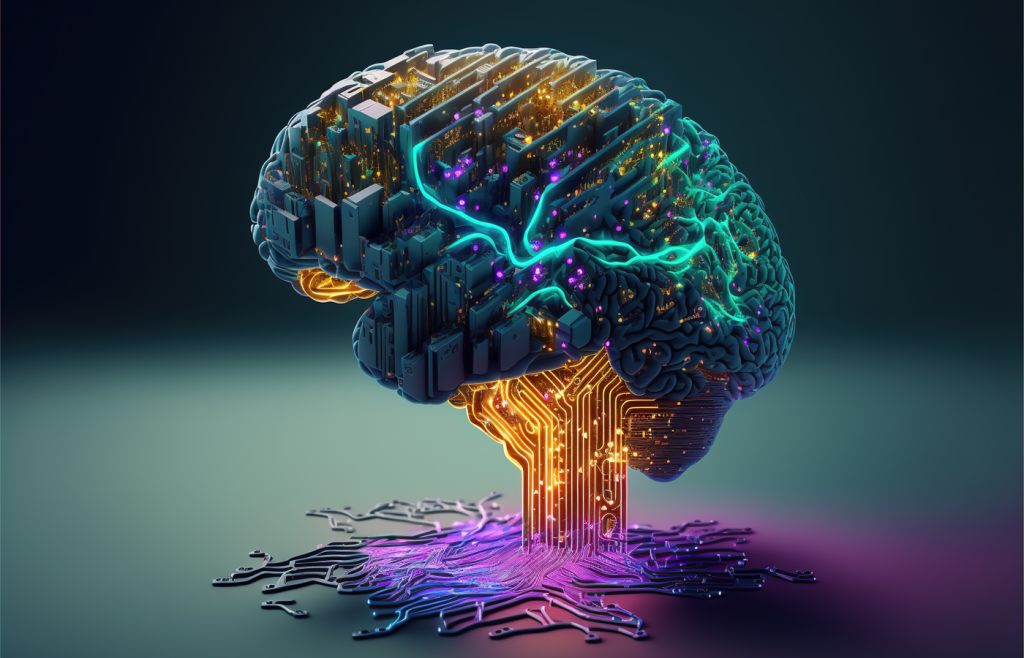
This comprehensive article delves into the profound impact of generative AI applications across various sectors, examining how it is reshaping the landscape of creativity, healthcare, finance, education, and beyond.
Unleashing Creativity: Art, Design, and Entertainment
Generative AI is a powerful catalyst for creativity, enabling artists, designers, and creators to push the boundaries of their work.
Revolutionizing Art and Design
Generative AI tools like DeepDream, DALL-E, and Artbreeder have opened new avenues for artistic expression. These tools can generate unique and innovative artworks by learning from vast datasets of existing art. Artists can now explore styles and concepts that were previously unattainable, blending human creativity with machine precision.
Case Study: AI-Generated Art at Auctions
In 2018, Christie’s auctioned an AI-generated portrait, “Portrait of Edmond de Belamy,” for $432,500. Created by the Paris-based collective Obvious, this painting exemplifies the growing acceptance and value of AI-generated art in the traditional art market. It highlights how AI can serve as a collaborative partner in artistic creation, rather than a mere tool.
Enhancing Graphic and Industrial Design
Generative design software, such as Autodesk’s Dreamcatcher, allows designers to input specific parameters and constraints, and the AI generates a multitude of design alternatives. This approach accelerates the design process and leads to more innovative and optimized solutions.
Example: Airbus A320 Bionic Partition
Airbus used generative design to create a bionic partition for the A320 aircraft, resulting in a lightweight and strong structure inspired by natural forms. The partition was 45% lighter than traditional designs, contributing to fuel efficiency and reducing emissions.
Transforming the Music Industry
Generative AI is also making waves in the music industry. AI systems like Aiva (Artificial Intelligence Virtual Artist) and OpenAI’s MuseNet can compose original music pieces across various genres, providing musicians with new tools for creativity and experimentation.
Example: Endel’s Personalized Soundscapes
Endel, an AI-powered app, generates personalized soundscapes designed to enhance focus, relaxation, and sleep. By analyzing user data and environmental factors, Endel creates dynamic and adaptive audio experiences, showcasing the potential of generative AI in personalized entertainment.
Advancing Healthcare: From Diagnostics to Drug Discovery
Generative AI is poised to revolutionize healthcare, offering significant advancements in diagnostics, treatment, and drug discovery.
Improving Diagnostic Accuracy
Generative AI models trained on vast amounts of medical data can assist in diagnosing diseases with high accuracy. These models can identify patterns and anomalies that may be missed by human clinicians, leading to earlier detection and improved outcomes.
Example: AI in Radiology
AI algorithms developed by companies like Zebra Medical Vision and Aidoc analyze medical images to detect conditions such as fractures, tumors, and infections. These AI systems provide radiologists with second opinions, enhancing diagnostic accuracy and efficiency.
Accelerating Drug Discovery
The drug discovery process is traditionally time-consuming and costly. Generative AI can significantly accelerate this process by predicting the structure and properties of potential drug compounds. Companies like Insilico Medicine and Atomwise use AI to identify promising drug candidates, reducing the time and cost involved in bringing new drugs to market.
Case Study: COVID-19 Drug Discovery
During the COVID-19 pandemic, generative AI played a crucial role in identifying potential antiviral compounds. AI models analyzed vast datasets of molecular structures and biological activities, rapidly generating hypotheses about effective treatments. This accelerated the initial stages of drug development and highlighted the importance of AI in responding to global health crises.
Personalizing Treatment Plans
Generative AI enables personalized medicine by tailoring treatment plans to individual patients. By analyzing genetic, environmental, and lifestyle data, AI models can recommend treatments that are more likely to be effective for specific patients, reducing adverse effects and improving outcomes.
Example: Oncology Treatment
In oncology, AI platforms like IBM Watson for Oncology analyze patient data to recommend personalized cancer treatment plans. These recommendations are based on the latest research and clinical guidelines, providing oncologists with valuable insights to inform their decisions.
Revolutionizing Finance: Efficiency and Innovation
The financial industry is leveraging generative AI to enhance efficiency, improve decision-making, and create new products and services.
Enhancing Fraud Detection
Fraud detection is a critical application of AI in finance. Generative AI models analyze transaction data to detect patterns and anomalies that may indicate fraudulent activity. By continuously learning from new data, these models become increasingly effective at identifying and preventing fraud.
Example: PayPal’s AI-Driven Fraud Prevention
PayPal uses AI to monitor transactions in real-time, detecting and preventing fraudulent activities. The AI system analyzes vast amounts of data to identify unusual patterns and flag potentially fraudulent transactions, improving security and reducing losses.
Optimizing Algorithmic Trading
Generative AI is transforming algorithmic trading by analyzing market data to make trading decisions at high speed and frequency. AI-driven algorithms can identify trends, predict market movements, and execute trades with precision, maximizing returns and minimizing risks.
Case Study: Renaissance Technologies
Renaissance Technologies, a hedge fund, uses AI-driven algorithms to execute trades. The firm’s Medallion Fund is known for its high returns, achieved through the use of sophisticated AI models that analyze market data and execute trades autonomously.
Innovating Financial Products
Generative AI enables the creation of innovative financial products and services tailored to customer needs. AI models can analyze customer data to generate personalized investment portfolios, loan products, and insurance plans, enhancing customer satisfaction and loyalty.
Example: Robo-Advisors
Robo-advisors like Betterment and Wealthfront use AI to provide personalized investment advice and portfolio management. By analyzing customer goals, risk tolerance, and market conditions, these platforms offer tailored investment strategies that optimize returns and minimize risks.
Transforming Education: Personalized Learning and Beyond
Generative AI is reshaping education by enabling personalized learning experiences and improving educational outcomes.
Personalized Learning Experiences
AI-driven educational platforms analyze student data to create personalized learning paths. By adapting to individual learning styles, preferences, and progress, these platforms enhance student engagement and improve learning outcomes.
Example: Duolingo’s AI-Powered Language Learning
Duolingo uses AI to personalize language learning experiences for its users. The AI system adapts lessons based on user performance, ensuring that each learner receives the right level of challenge and support to progress effectively.
Automating Administrative Tasks
Generative AI can automate administrative tasks in educational institutions, such as grading, scheduling, and resource allocation. This automation reduces the workload for educators and administrators, allowing them to focus on teaching and student support.
Example: AI in Grading
AI-powered grading systems like Gradescope use machine learning to grade assignments and exams. These systems provide consistent and objective evaluations, freeing up time for educators to provide personalized feedback and support to students.
Enhancing Educational Content
Generative AI can create educational content tailored to specific learning objectives and student needs. AI-generated simulations, interactive exercises, and multimedia resources can make learning more engaging and effective.
Example: AI-Generated Simulations
AI-generated simulations in subjects like biology, physics, and chemistry allow students to experiment and explore concepts in a virtual environment. These simulations provide hands-on learning experiences that enhance understanding and retention.
Innovating Manufacturing and Supply Chain Management
Generative AI is driving innovation in manufacturing and supply chain management, enhancing efficiency and reducing costs.
Optimizing Product Design and Development
Generative AI tools enable manufacturers to optimize product design and development processes. By generating multiple design alternatives based on specified parameters, AI helps identify the most efficient and effective solutions.
Case Study: General Motors’ AI-Driven Design
General Motors uses generative design software to create lightweight and efficient vehicle components. The AI-generated designs are tested and refined, resulting in parts that improve vehicle performance and fuel efficiency.
Enhancing Supply Chain Efficiency
Generative AI can analyze supply chain data to identify inefficiencies and optimize operations. AI models can predict demand, optimize inventory levels, and improve logistics, reducing costs and enhancing supply chain resilience.
Example: AI in Supply Chain Management
Companies like DHL use AI to optimize supply chain operations. AI models analyze data from various sources to predict demand, optimize routes, and manage inventory, ensuring timely and cost-effective delivery of goods.
Predictive Maintenance
Generative AI enables predictive maintenance by analyzing data from sensors and equipment to predict failures before they occur. This approach reduces downtime, extends equipment life, and lowers maintenance costs.
Example: AI in Manufacturing Maintenance
Siemens uses AI-powered predictive maintenance to monitor and maintain its industrial equipment. The AI system analyzes sensor data to detect signs of wear and tear, allowing for timely maintenance and reducing the risk of unexpected failures.
Enhancing Customer Experience: Retail and E-Commerce
Generative AI is transforming the retail and e-commerce industries by enhancing customer experiences and driving sales.
Personalizing Customer Interactions
Generative AI enables personalized customer interactions by analyzing data on customer preferences, behavior, and purchase history. Retailers and e-commerce platforms can use this information to tailor recommendations, marketing messages, and customer service interactions, increasing customer satisfaction and loyalty.
Example: Amazon’s Personalized Recommendations
Amazon leverages AI to provide personalized product recommendations based on customer browsing and purchase history. The AI algorithms analyze data to suggest products that customers are likely to be interested in, driving sales and enhancing the shopping experience.
Enhancing Visual Search and Augmented Reality
Generative AI enhances visual search capabilities and augmented reality (AR) applications in retail. Customers can search for products using images and try on products virtually, improving the convenience and engagement of the shopping experience.
Example: IKEA Place App
IKEA’s AR app, IKEA Place, uses AI to allow customers to visualize how furniture would look in their homes. By simply pointing their smartphone cameras at a room, customers can see virtual representations of IKEA furniture in real time, helping them make more informed purchasing decisions.
Optimizing Inventory Management
AI models can predict demand trends and optimize inventory levels, ensuring that popular products are always in stock and reducing the costs associated with overstocking and stockouts.
Example: Zara’s AI-Powered Inventory Management
Fashion retailer Zara uses AI to analyze sales data and predict demand trends. The AI system helps Zara optimize its inventory levels and restock stores efficiently, reducing waste and improving customer satisfaction by ensuring that popular items are always available.
Empowering Legal and Professional Services
Generative AI is making significant inroads into legal and professional services, automating complex tasks and enhancing decision-making.
Automating Legal Document Review
Generative AI can automate the review and analysis of legal documents, contracts, and case files. AI models can identify relevant information, flag potential issues, and suggest edits, significantly reducing the time and effort required by legal professionals.
Example: LawGeex AI Contract Review
LawGeex offers an AI-powered platform that reviews contracts and identifies potential risks and compliance issues. The AI system can analyze and compare contracts against a company’s legal policies, ensuring consistency and reducing the risk of human error.
Enhancing Legal Research
AI-powered legal research tools can analyze vast amounts of legal texts, case law, and statutes to provide relevant insights and recommendations. This allows legal professionals to find pertinent information quickly and make informed decisions.
Example: ROSS Intelligence
ROSS Intelligence uses AI to assist legal professionals in conducting legal research. The AI system can interpret complex legal queries and provide relevant case law and legal precedents, enhancing the efficiency and accuracy of legal research.
Streamlining Professional Services
Generative AI can automate routine tasks in professional services such as accounting, consulting, and human resources. This allows professionals to focus on higher-value activities and deliver better client outcomes.
Example: AI in Accounting
AI-powered accounting platforms like Xero and QuickBooks use AI to automate bookkeeping, invoicing, and financial reporting. The AI systems can analyze financial data, identify trends, and provide insights, helping businesses manage their finances more effectively.
Transforming Scientific Research and Development
Generative AI is revolutionizing scientific research and development by enabling new discoveries and accelerating innovation.
Accelerating Scientific Discoveries
AI models can analyze complex datasets and identify patterns that may not be apparent to human researchers. This capability is particularly valuable in fields such as genomics, materials science, and climate science.
Example: AI in Genomics
AI platforms like DeepMind’s AlphaFold have made significant advancements in predicting protein structures, a critical aspect of genomics research. These AI models can predict the 3D shapes of proteins based on their amino acid sequences, aiding in the understanding of biological processes and the development of new treatments.
Optimizing Research Processes
Generative AI can optimize research processes by automating data analysis, hypothesis generation, and experimental design. This reduces the time and effort required for scientific research and increases the likelihood of breakthroughs.
Example: AI in Drug Discovery
Pharmaceutical companies are using generative AI to optimize the drug discovery process. AI models can analyze biological data, predict the efficacy of drug candidates, and design new molecules, significantly speeding up the development of new medications.
Enabling Virtual Experiments and Simulations
Generative AI enables virtual experiments and simulations that can test hypotheses and explore scenarios without the need for physical experiments. This is particularly valuable in fields like physics, chemistry, and engineering.
Example: AI in Climate Modeling
AI-driven climate models can simulate complex environmental systems and predict the impact of various factors on climate change. These models help researchers understand climate dynamics and develop strategies to mitigate the effects of global warming.
Ethical Considerations and Challenges
While generative AI offers immense potential, it also raises important ethical considerations and challenges that must be addressed.
Addressing Bias and Fairness
Generative AI models can inherit and amplify biases present in the training data. It is crucial to develop techniques to identify and mitigate bias, ensuring that AI systems are fair and do not perpetuate discrimination.
Example: Bias Mitigation in AI
AI researchers are developing methods to detect and reduce bias in generative AI models. Techniques such as fairness-aware training, bias audits, and diverse dataset curation are being used to create more equitable AI systems.
Ensuring Data Privacy and Security
Generative AI systems require vast amounts of data, raising concerns about data privacy and security. It is essential to implement robust data protection measures and ensure compliance with regulations like GDPR and CCPA.
Example: Privacy-Preserving AI
Privacy-preserving AI techniques, such as differential privacy and federated learning, are being developed to protect individual privacy while enabling the use of data for AI training. These methods allow AI models to learn from data without compromising personal information.
Maintaining Transparency and Accountability
Transparency and accountability are critical in ensuring the responsible use of generative AI. It is important to develop explainable AI models that provide insights into their decision-making processes and establish accountability mechanisms for AI systems.
Example: Explainable AI
Explainable AI techniques aim to make AI models more transparent and understandable to humans. These techniques provide explanations for AI decisions, helping users trust and interpret the outputs of AI systems.
Conclusion
Generative AI is a transformative technology that is reshaping industries and driving innovation across various domains. From enhancing creativity and revolutionizing healthcare to optimizing finance, education, manufacturing, and more, the impact of generative AI is profound and far-reaching. However, it is essential to address the ethical considerations and challenges associated with this technology to ensure its responsible and equitable use.
As generative AI continues to evolve, its potential applications will expand, offering even greater opportunities for growth and transformation. By embracing the power of generative AI and navigating its challenges, businesses and societies can unlock new possibilities and create a future where AI enhances human capabilities and drives progress.
 AI4ever
Leave a comment