Introduction
In today’s fast-paced and dynamic manufacturing landscape, efficient production planning and scheduling are critical for success. The integration of Artificial Intelligence (AI) into production processes has revolutionized the way businesses manage their operations. This article explores the role of AI in production planning and scheduling, highlighting its benefits, challenges, and potential future developments.
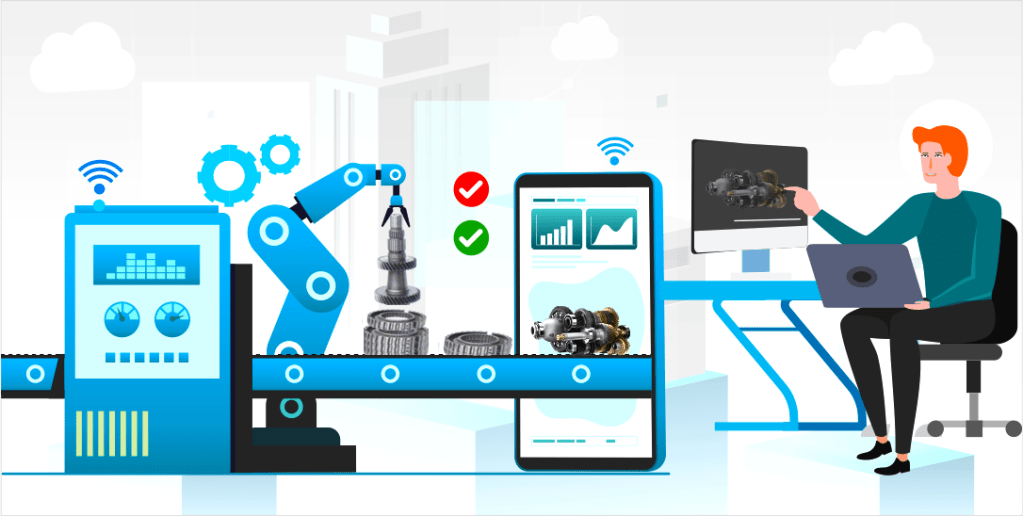
This article explores the role of AI in production planning and scheduling, highlighting its benefits, challenges, and potential future developments.
I. Understanding Production Planning and Scheduling
A. Production Planning
Production planning involves creating a roadmap that outlines the entire manufacturing process, from resource allocation to timelines. This process ensures that raw materials are available, production capacities are optimized, and costs are minimized. Traditionally, production planning has been a complex task requiring extensive manual intervention and constant adjustments.
B. Scheduling in Production
Scheduling, on the other hand, is the process of determining when and where specific tasks will be performed within the production timeline. It involves allocating resources efficiently to meet production goals while minimizing downtime and costs. Manual scheduling is often time-consuming and prone to errors, leading to inefficiencies and increased production costs.
II. The Integration of AI in Production Planning
A. Demand Forecasting
AI algorithms can analyze historical data, market trends, and other relevant factors to predict future demand accurately. By understanding demand patterns, businesses can optimize production plans, ensuring that they meet customer needs while avoiding overproduction or shortages.
B. Resource Allocation
AI plays a crucial role in optimizing resource allocation. Machine learning algorithms can analyze data on equipment performance, workforce availability, and other variables to allocate resources efficiently. This leads to improved production efficiency and cost reduction.
C. Real-time Decision Making
One of the significant advantages of AI in production planning is its ability to make real-time decisions. AI systems can continuously monitor and analyze data, enabling quick adjustments to production plans based on changing circumstances. This agility is crucial in today’s fast-changing market conditions.
III. Benefits of AI in Production Planning
A. Increased Efficiency
By automating complex tasks and optimizing resource allocation, AI enhances overall production efficiency. This results in reduced lead times, lower production costs, and increased output.
B. Improved Accuracy
AI algorithms can process vast amounts of data with a high degree of accuracy, minimizing errors in production planning and scheduling. This leads to better decision-making and a more reliable production process.
C. Cost Reduction
Efficient resource allocation, accurate demand forecasting, and reduced downtime contribute to significant cost savings. AI helps businesses identify areas where costs can be minimized without compromising quality or output.
D. Enhanced Flexibility
AI-driven production planning allows for greater flexibility in adapting to changing market conditions. Businesses can quickly adjust their production plans based on real-time data, ensuring they remain competitive and responsive to customer demands.
IV. Challenges in Implementing AI in Production Planning
A. Initial Investment
While the long-term benefits are substantial, the initial investment in AI implementation can be a barrier for some businesses. Acquiring and integrating AI systems may require significant upfront costs, which can be a challenge for smaller enterprises.
B. Workforce Training
Implementing AI in production planning may necessitate training the existing workforce to understand and operate the new technology. Resistance to change and the need for upskilling can pose challenges during the transition period.
C. Data Security Concerns
As AI relies heavily on data, ensuring the security of sensitive information is crucial. Businesses need robust cybersecurity measures to protect their data from breaches, which can be a concern when integrating AI into production processes.
V. Future Trends and Developments
A. Advanced Predictive Analytics
The future of AI in production planning will likely involve even more sophisticated predictive analytics. AI systems will become better at analyzing data, identifying patterns, and making accurate predictions, further optimizing production processes.
B. Collaborative Robots (Cobots)
The integration of collaborative robots, or cobots, in production processes will enhance the collaboration between humans and machines. Cobots can perform repetitive tasks, allowing human workers to focus on more complex and creative aspects of production.
C. Integration with IoT
The Internet of Things (IoT) will play a crucial role in the future of AI-driven production planning. Real-time data from IoT devices on the factory floor will provide valuable insights, enabling AI systems to make more informed decisions.
VI. Conclusion
In conclusion, the integration of AI in production planning and scheduling has brought about transformative changes in the manufacturing industry. The benefits, such as increased efficiency, improved accuracy, and cost reduction, outweigh the challenges. As technology continues to advance, businesses that embrace AI in their production processes will likely enjoy a competitive edge in the ever-evolving global market. It is imperative for companies to invest in AI technologies, adapt to the changing landscape, and position themselves for success in the future of production planning.
 AI4ever
Leave a comment