The retail landscape is undergoing a transformative shift with the integration of advanced technologies, and generative AI platforms are at the forefront of this revolution. These platforms leverage artificial intelligence to generate new, valuable content, enabling retailers to enhance customer experiences, optimize operations, and stay competitive in a rapidly evolving market. In this article, we will delve into the key features of generative AI platforms for retail and explore how they are reshaping the industry.
I. Personalized Customer Experiences
1.1 Recommendation Engines
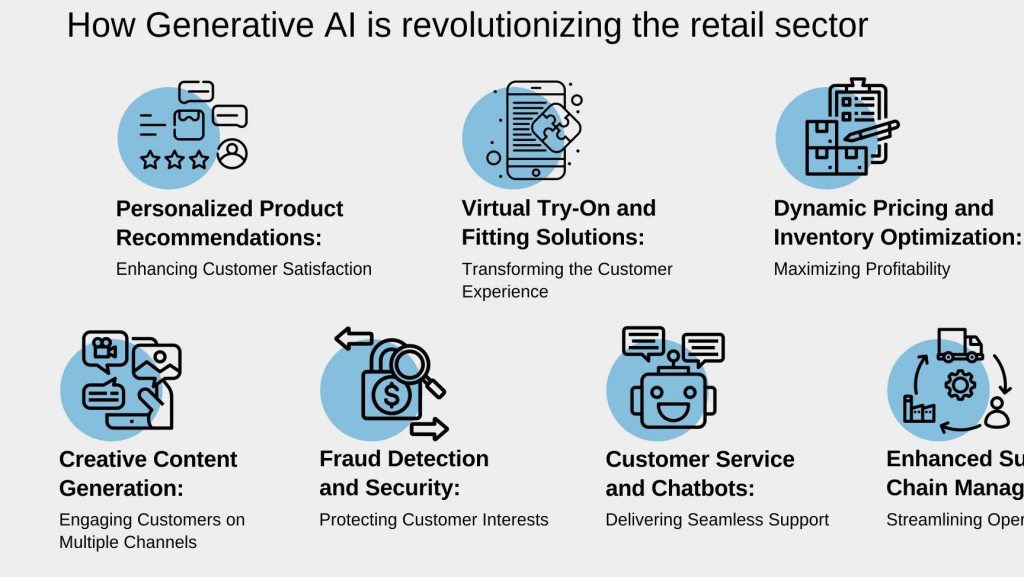
The developing Generative AI platforms for retail employ sophisticated recommendation engines that analyze vast amounts of customer data to provide personalized product recommendations. These engines take into account a customer’s browsing history, purchase behavior, and preferences, creating a tailored shopping experience. As a result, retailers can increase customer satisfaction and drive sales by showcasing products that align with individual tastes.
1.2 Virtual Personal Shoppers
Some generative AI platforms go beyond traditional recommendation engines and offer virtual personal shoppers. These virtual assistants use natural language processing and machine learning to understand customer queries and guide them through the shopping journey. By mimicking the expertise of an in-store personal shopper, these AI-driven assistants enhance the online shopping experience, offering product suggestions, styling tips, and answering customer queries.
II. Enhanced Visual Merchandising
2.1 AI-Generated Imagery
Generative AI platforms excel in creating high-quality, realistic product images. These platforms can generate lifelike visuals of products, helping retailers showcase their inventory in a visually appealing manner. From 360-degree product views to augmented reality try-ons, AI-generated imagery elevates the online shopping experience and aids in the decision-making process for customers.
2.2 Dynamic Content Creation
Retailers often face challenges in maintaining fresh and engaging content across digital platforms. Generative AI platforms address this issue by automating the creation of dynamic content. Whether it’s creating social media posts, blog articles, or product descriptions, these platforms use natural language generation to produce compelling and relevant content, saving time and resources for retailers.
III. Inventory Management and Demand Forecasting
3.1 Smart Inventory Optimization
Generative AI platforms contribute to efficient inventory management by predicting demand trends and optimizing stock levels. By analyzing historical sales data, market trends, and external factors, these platforms help retailers avoid stockouts or overstock situations, leading to improved operational efficiency and cost savings.
3.2 Demand Forecasting
Accurate demand forecasting is crucial for retailers to streamline their supply chain and meet customer expectations. Generative AI platforms leverage advanced forecasting models to predict future demand based on historical data, seasonality, and market trends. This enables retailers to make informed decisions regarding procurement, production, and distribution, ultimately reducing waste and improving profitability.
IV. Chatbots and Customer Support
4.1 AI-Powered Chatbots
Generative AI platforms play a vital role in enhancing customer support through the implementation of AI-powered chatbots. These chatbots utilize natural language processing to understand and respond to customer inquiries in real-time. Whether it’s answering product-related questions, assisting with order tracking, or resolving issues, AI-powered chatbots provide immediate and efficient support, improving overall customer satisfaction.
4.2 Multilingual Support
In a globalized retail environment, catering to diverse customer bases requires multilingual support. Generative AI platforms with language capabilities enable retailers to deploy chatbots that can communicate fluently in multiple languages. This not only broadens the reach of customer support but also enhances the inclusivity of the retail experience.
V. Fraud Detection and Security
5.1 Anomaly Detection
Security is a top priority for retail businesses, especially in the digital realm. Generative AI platforms incorporate anomaly detection algorithms to identify unusual patterns and behaviors that may indicate fraudulent activities. This proactive approach helps retailers prevent and mitigate security threats, safeguarding sensitive customer information and maintaining trust.
5.2 Biometric Authentication
To bolster security measures, some generative AI platforms integrate biometric authentication for user verification. Whether it’s facial recognition, fingerprint scanning, or voice authentication, these technologies add an extra layer of protection, reducing the risk of unauthorized access and fraudulent transactions.
VI. Real-time Pricing Optimization
6.1 Dynamic Pricing Strategies
Generative AI platforms contribute to pricing optimization by implementing dynamic pricing strategies. These platforms analyze real-time market data, competitor pricing, and customer behavior to adjust prices dynamically. Retailers can maximize revenue by setting optimal prices based on demand fluctuations, inventory levels, and other relevant factors.
6.2 Competitor Price Monitoring
Staying competitive in the retail landscape requires a keen understanding of competitor pricing strategies. Generative AI platforms automate competitor price monitoring, continuously tracking and analyzing pricing trends in the market. Retailers can use this information to adjust their own pricing strategies, ensuring they remain competitive while maintaining profitability.
VII. Integration with Emerging Technologies
7.1 Internet of Things (IoT) Integration
Generative AI platforms often integrate with IoT devices to collect real-time data from physical retail spaces. This data can include foot traffic, dwell times, and customer interactions with products. By leveraging IoT integration, retailers gain valuable insights into customer behavior and preferences, enabling them to optimize store layouts, enhance product placements, and improve the overall in-store experience.
7.2 Augmented Reality (AR) and Virtual Reality (VR) Experiences
To bridge the gap between online and offline retail experiences, some generative AI platforms incorporate AR and VR technologies. These immersive experiences allow customers to virtually try on products, visualize furniture in their homes, or experience a virtual walk-through of a store. By offering interactive and engaging experiences, retailers can capture customer attention and differentiate themselves in a competitive market.
VIII. Data Analytics and Insights
8.1 Predictive Analytics
Generative AI platforms harness the power of predictive analytics to forecast future trends and behaviors. By analyzing historical data and identifying patterns, retailers can make data-driven decisions, anticipate customer preferences, and stay ahead of market trends. Predictive analytics also empower retailers to proactively address challenges and capitalize on emerging opportunities.
8.2 Customer Journey Mapping
Understanding the customer journey is essential for retailers looking to optimize the shopping experience. Generative AI platforms facilitate customer journey mapping by analyzing touchpoints across various channels. This comprehensive view enables retailers to identify pain points, streamline the purchase process, and create a seamless and enjoyable customer experience.
Conclusion
Generative AI platforms are revolutionizing the retail industry by providing innovative solutions that enhance customer experiences, optimize operations, and drive business growth. From personalized recommendations to advanced security measures, these platforms offer a comprehensive suite of features that empower retailers to adapt to evolving market dynamics. As the retail landscape continues to evolve, embracing generative AI is not just a technological investment but a strategic imperative for those aiming to stay competitive and deliver exceptional value to their customers.
 AI4ever
Leave a comment